
Origin and Differences of Jadeite
Many people may know little about the origins of jadeite and their distinctions. This article will delve into the main jadeite sources, characteristics of different origins, identification methods, and price differences in the market, guiding you to explore the mysteries of the jadeite world.

Rendering...
Jadeite, a gemstone embodying the essence of nature and carrying the elegance of Eastern culture, has been cherished by people throughout history. Particularly in Chinese culture, it symbolizes auspiciousness, prosperity, and safety. However, many people may know little about jadeite's origins and their distinctions. This article will explore jadeite's major producing regions, their characteristics, identification methods, and price differences in the market, revealing the mysteries of the jadeite world.

## Introduction to Jadeite

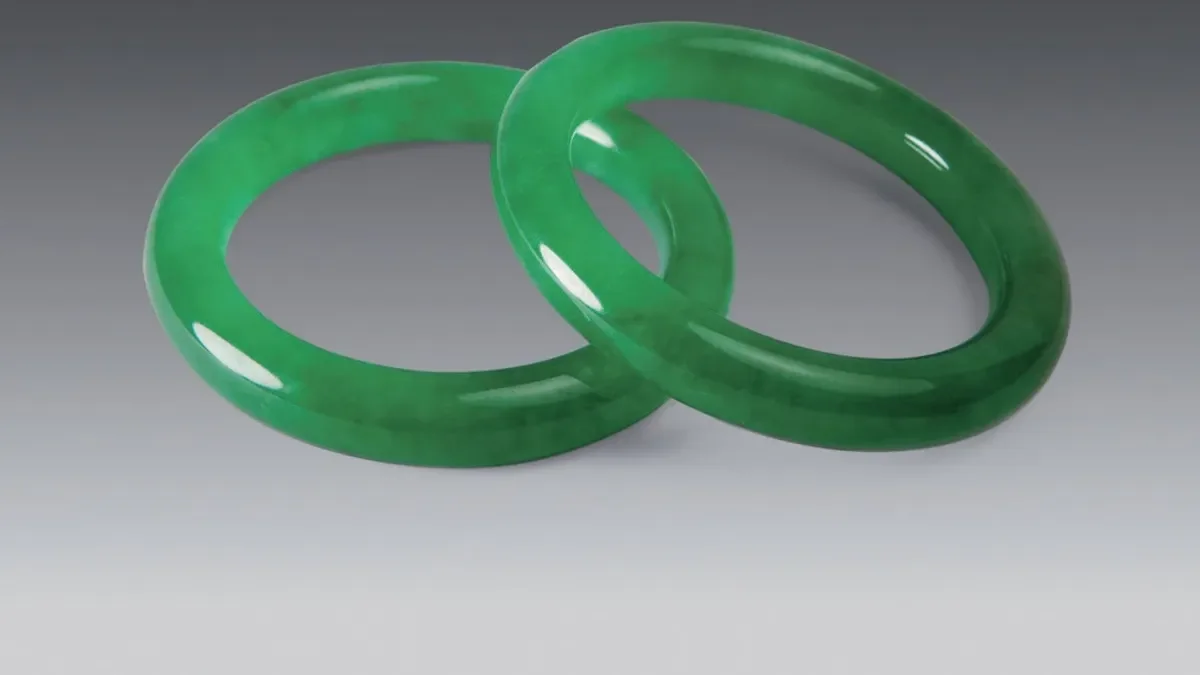
Jadeite, a type of jade belonging to the pyroxene mineral group, has a chemical composition of sodium aluminum silicate (NaAlSi₂O₆). It is renowned for its unique colors, textures, translucency, and luster, especially its vibrant emerald-green hue, which has earned it the title of "King of Jade." Jadeite exhibits a rich variety of colors, including the most coveted green, as well as white, purple (Spring Color), yellow (Huang Fei), red (Red Fei), black (Ink Jade), and multi-colored combinations known as "Fu Lu Shou."

Jadeite's value is evaluated based on multiple criteria including "type," "water," "color," "craftsmanship," "cracks," "veins," and "impurities." Here, "type" refers to texture, "water" indicates translucency, and "color" denotes hue. High-quality jadeite typically features fine textures (such as glass type or ice type), high translucency ("abundant water"), and vivid, pure colors.

## Major Jadeite Producing Regions

Although jadeite deposits have been discovered in multiple global regions, only a few locations produce gem-grade material suitable for commercial mining. Among these, **Myanmar** unquestionably remains the world's most important and highest-quality jadeite source, dominating the market for premium jadeite. Other producing regions include Guatemala, Russia, Japan, and the United States, though their quality and output pale in comparison to Myanmar's.

The following table provides an overview of major jadeite-producing regions:

| **Origin**       | **Key Characteristics**                                                 |
|------------------|-------------------------------------------------------------------------|
| **Myanmar**       | **Best quality and largest production.** Offers rich colors ranging from colorless to Imperial Green, Spring Colors, and Fu Lu Shou. Known for fine texture, high translucency, and strong luster, representing the pinnacle of gem-grade jadeite. |
| **Guatemala**     | **Second only to Myanmar in commercial value.** Typically features darker, bluish tones ("Blue Water" material). Coarser structure with common black speck inclusions. High-quality material has gained significant market presence in recent years. |
| **Russia**        | **Coarse texture, mostly mid-to-low grade.** Primarily white, grayish-white, or light green with uneven color distribution and generally low translucency. Mostly used for carvings or low-end jewelry. |
| **Japan**         | **Mainly geological specimens, mining prohibited.** Produces dry-textured jadeite in white or mottled green hues. Fails to meet commercial gemstone standards and is currently protected against mining. |
| **United States** | **Low quality and scarce production.** Mainly found in California as aggregate forms with dry texture. Colors range from pale green to grayish green, typically used as mineral specimens or semi-precious materials. |
| **Kazakhstan** | **Coarse grain and limited colors.** Usually features light green to emerald-green hues with extremely poor translucency. Rarely seen in commercial markets. |Comments
Please login to view and post comments
Go to Login